Pride 2026: Finding Revolutionary Joy in Community
Welp, Pride is happening whether we're ready or not. And right now, in June 2026, with LGBTQIA+ rights under active attack, with abortion bans reshaping how we think about bodily autonomy, with drag performers facing criminalization, and with legislative efforts to erase trans people and restrict access to affirming care, Pride means something fiercer than it ever has.
This is not just about celebration. This is about resistance. This is about showing up for each other. This is about reclaiming joy as a radical act.
I want to offer you both things: the practical framework to stay safe during Pride, and the deeper permission to understand that your joy, including your dancing, your visibility, your community, your sexuality, your love, is not frivolous.
It's foundational.
It's resistance.
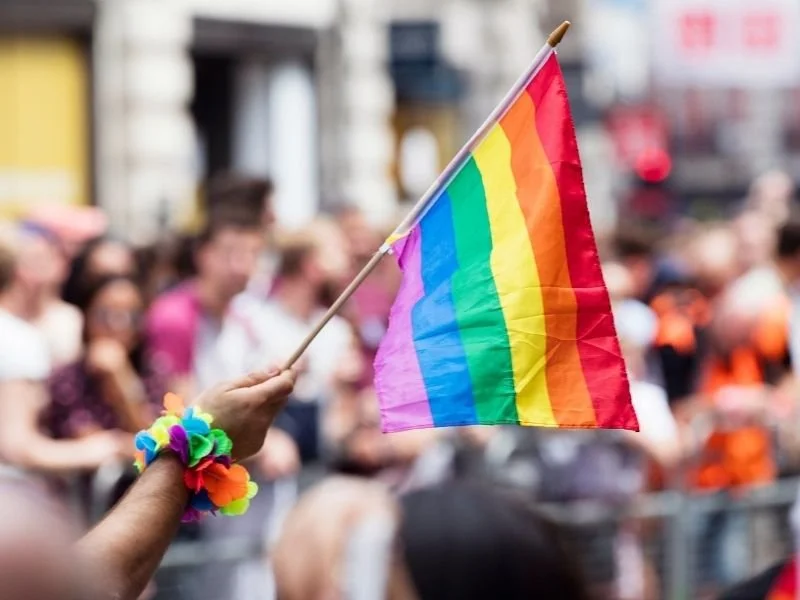
Pride as Resistance: Reclaiming Joy and Community Solidarity
Let's start with the thing that matters most right now.
Pride didn't start as a parade. It started as a riot. When police raided the Stonewall Inn on June 28, 1969, they didn't encounter passive observers. They encountered Marsha P. Johnson, Sylvia Rivera, and thousands of other trans women of color, drag queens, street youth, and sex workers who fought back. Who refused. Who made noise.
We've written before about Marsha P. Johnson's legacy as an activist and organizer, but what bears repeating now is this: Marsha didn't fight for Pride parades so we could all applaud from the sidelines. She fought so that we could exist fully. Loudly. Unapologetically. In community.
Joy as a Political Act
When state and federal governments are actively working to criminalize your identity, your sexuality, and your right to access gender-affirming care, joy becomes radical.
This is not about toxic positivity. This is not about pretending that the legal landscape isn't terrifying or that systemic discrimination doesn't exist. It absolutely does. Queer and trans people, especially those who are Black, Indigenous, and People of Color, face disproportionate rates of violence, housing instability, employment discrimination, and barriers to healthcare.
But joy is not a denial of these realities. Joy in the face of those realities is resistance.
When you dance at Pride knowing that your state legislature just passed a bill criminalizing drag, you're saying: I exist, I'm here, and I refuse to shrink. When you show up for a stranger's chosen family gathering, you're saying: I will not let them isolate us. When you have pleasure, when you celebrate your sexuality, when you take up space—you're participating in an act of collective defiance.
Research on LGBTQ+ resilience consistently shows us that community connection, belonging, and experiences of pride and affirmation are protective factors against depression, anxiety, and suicidality. This is not soft. This is literal survival infrastructure.
Building Community as Resistance
Pride works as resistance only if we're building it together. Not for the cameras or the corporate floats, but for each other.
This means:
Show up for people beyond your immediate circle. If you're safe, if you have resources, if you're visible in ways that others might not be…use that. Invite someone who might be isolated. Check in with trans people in your life. Connect with folks who are multiply marginalized.We've written about queer men in the margins, about the ways that people with intersecting identities often have to choose between communities. Pride is a moment to refuse that choice. Create space for the whole person.
Choose your family intentionally. One of the most powerful things about queer culture is the concept of chosen family—the radical act of deciding who gets to be in your inner circle, who you show up for, who you trust.Queer friendships are not incidental to Pride celebrations; they're foundational to them. Your chosen family is your resistance cell. Make space for these relationships during Pride and all year long.
Take care of each other's safety and bodies. One of the most revolutionary things you can do is prioritize collective care. That means watching your friends' drinks, creating exit plans together, practicing harm reduction without shame, and being genuinely willing to leave a space that doesn't feel safe. It means asking before you touch. It means talking about consent, about boundaries, about risk reduction with the same tenderness you bring to pleasure. Community care is resistance care.
Lift up the stories and wisdom of trans and BIPOC LGBTQ+ folks. Stonewall was led by trans women of color and street youth. Contemporary resistance is led by those communities too. If you're consuming Pride content, supporting LGBTQ+-owned businesses, or making decisions about where to celebrate—prioritize spaces and creators who center the most marginalized of us. That's where the real work is.
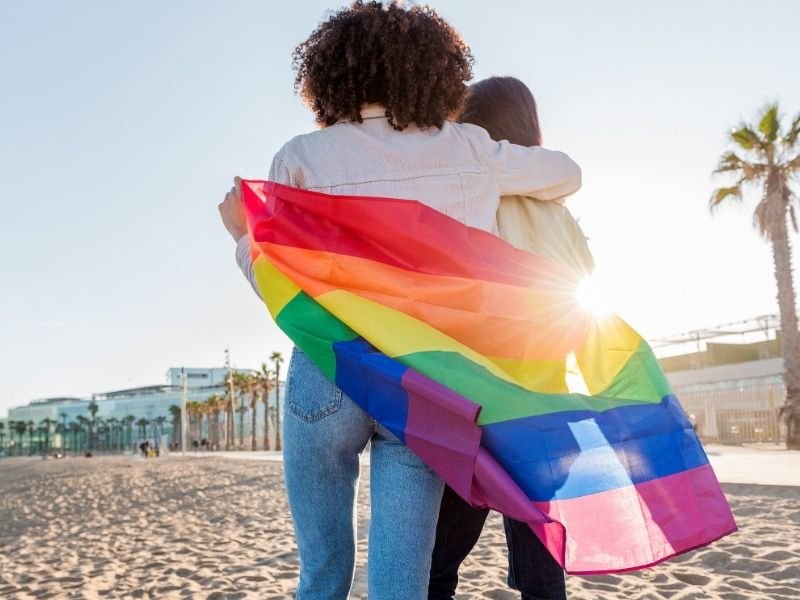
The Practical Framework: Stay Safe So You Can Thrive
Safety and joy are not opposing forces. In fact, when you take care of your physical and emotional safety, you create the conditions for genuine joy. You can dance harder. You can be more present. You can trust the people around you.
Here's the framework:
Stay in Groups (And Make It Matter)
One of the most important ways to stay safe during Pride is to stay in groups to encourage collective care.
Designate your chosen family or a small crew to stay close. If someone says "I'm not feeling this," you leave. If someone's intoxication is shifting toward vulnerability, you make a plan together. If someone's being predatory, you intervene.
This is community care in action.
Some of you will cheer on your friends from the sidelines while they chat up that cutie they've been checking out all night. That's part of it too. The joy of witnessing joy in people you love.
Be Mindful of Substance Use
It's tempting to use substances to ease social anxiety or amplify pleasure during Pride, and we're not here to judge that impulse. But consciousness and presence can be their own high.
Alcohol and drugs can impair your judgment, your ability to notice red flags in other people, and your capacity to advocate for yourself in the moment. Instead of drinking excessively, consider finding other ways to access the excitement you're craving.
If you do choose to use:
Alternate alcohol with water. One drink, one water. It keeps you sharp and hydrated.
Use fentanyl test strips if you're taking party drugs. Know what you're consuming.
Stay with your people. Never use alone. Never leave someone who's using alone.
Plan your exit beforehand. Know how you're getting home, and know your friends know how they're getting home.
Remember: Pride is a marathon, not a sprint. You can have an incredible time without substances. And if you do use, you can do it much more safely with community around you.
Decide Your Risk and Desire Levels (Before You're In the Moment)
This one matters, especially when it comes to sex.
Our culture teaches us (wrongly) that desire should be spontaneous and unplanned. But when you're in a space full of attractive people, arousal, and possibility, making decisions in the moment is much harder. You're literally running from your lizard brain.
So plan ahead:
What are you interested in exploring? Who? What activities?
What's your risk tolerance? Are you looking for kissing? Sexual activity? What kind?
What are your boundaries? What's off the table? What would make you feel unsafe or uncomfortable?
How will you communicate this? With partners? With your crew?
How will you practice safer sex? Condoms? Barriers? Testing beforehand? Conversation about status?
This is what we mean when we talk about sexual clarity in our therapeutic work. It's not about overthinking pleasure; it's about protecting it.
Consent is always sexy. So is a conversation beforehand where everyone knows what they're signing up for.
And remember: you can change your mind. At any point. For any reason. "I'm not feeling this anymore" is a complete sentence. Your body, your boundaries.
Prioritize Your Physical and Mental Health
Pride can be an emotionally charged event. You might feel joy. You might feel grief. You might feel anger about the state of the world. You might feel lonely even in a crowd. All of these are valid.
Physically:
Wear sunscreen. Reapply it.
Stay hydrated. Keep drinking water even if you're not drinking alcohol.
Eat something. Blood sugar drops will mess with your mood and judgment.
Wear comfortable shoes (unless you're doing heels, in which case: respect).
Take breaks. Sit down. Step away from the crowd if you need to. Rest is not weakness.
Mentally:
Check in with yourself. Am I having fun? Do I need something different? Is someone making me uncomfortable?
If you feel triggered, overwhelmed, or dysphoric—you can leave. You don't owe anyone your presence.
Have a plan for grounding if anxiety hits. Maybe it's calling a trusted person. Maybe it's finding a quiet space. Maybe it's a breathing technique. Know what works for you.
If you have a history of trauma related to sexuality or community, consider scheduling some sessions before or after Pride to process what comes up.
We offer sex therapy and relationship therapy specifically for folks navigating these complexities. If you need support, we're here.
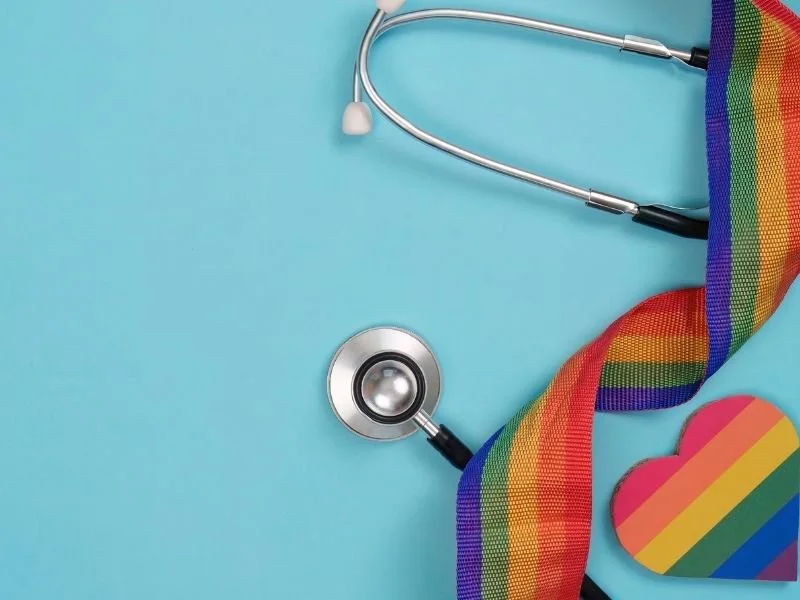
Practice Safer Sex
This is part of care, not shame.
Before Pride:
Get tested. STI testing. Know your status. Encourage your partners to do the same.
Get vaccinated. Monkeypox vaccine if you have access. HPV vaccine if you're eligible. These are acts of community care.
Consider PrEP or PEP. If you're at risk for HIV, PrEP (pre-exposure prophylaxis) is a medication that significantly reduces transmission risk. PEP (post-exposure prophylaxis) is available after potential exposure. Talk to a healthcare provider.
Consider Doxy-PEP. This is doxycycline taken after condomless sex to prevent bacterial STIs. It's showing promising results.
During Pride:
Use barriers. Condoms, dental dams, gloves—whatever works for the activity.
Communicate. Ask your partners about their testing status. Share yours. If you don't know, use protection.
Advocate for yourself. If someone pushes back against safer sex practices, that's a sign they're not respecting your body. That's your cue to leave.
Know your rights. You have the right to say no. You have the right to change your mind. You have the right to prioritize your health.
Safer sex is not a buzzkill. It's the foundation for genuine pleasure and peace of mind.
Finding Your Joy
Here's what I want you to know: You deserve this. You deserve to celebrate your identity without apology. You deserve pleasure. You deserve community. You deserve to take up space.
Pride in 2026 is not a neutral celebration. It's a declaration. When you show up—whether that's at a massive parade or a small gathering of chosen family, whether you're dancing or sitting on a curb watching the world go by—you're participating in something that matters.
You're saying: I exist. I'm here. I refuse to be erased.
That's revolutionary.
So yes, stay safe. Use the frameworks. Take care of your body and your mind. And then—let yourself feel the full spectrum of what Pride can be. The joy. The grief. The anger. The connection. The defiance. The love.
This Pride, make it about community. About showing up for people who might be more vulnerable than you. About reclaiming joy as an act of resistance. About choosing your family—both your biological family if they show up for you, and your chosen family, the people who've become your tribe.
Pride is not about corporate floats or influencers or fitting into someone else's vision of what celebration looks like. It's about you—your full, complex, beautiful, resistant, joyful self—surrounded by people who get it.
Let's make this year's celebration of resistance, community, and love the most authentic one yet.
Want Support?
If you're navigating questions around identity, sexuality, relationships, or community as you head into Pride, we're here.Our therapists specialize in working with LGBTQIA+ individuals and communities on these exact topics. Whether you want to process triggers before or after Pride, explore your desires and boundaries, or build a stronger sense of community and belonging,book a free consultation. We'll set up a time to talk about how we can support you.
And if you're looking for community right now?Check out our Anxiously Intimate Men's Group—a space for trans-inclusive men to work on connection, anxiety, and intimacy alongside people who get it.
You're not alone. We're here. Your community is here.
Shame less. Love more.
Resources & References
The Importance of Queer Friendships and How to Cultivate Them
Sexual Wellness and Empowerment: A Guide for LGBTQ+ Individuals
Medical Resources:
HIV.gov on PrEP: https://www.hiv.gov/hiv-basics/hiv-prevention/using-hiv-medication-to-reduce-risk/pre-exposure-prophylaxis/
UCSF on Doxy-PEP: https://www.ucsf.edu/news/2023/02/424861/doxycycline-sti-prevention-highly-effective-minimal-drug-resistance
David Khalili, LMFT is the Founder and Clinical Director of Rouse Relational Wellness in San Francisco. He specializes in sex, intimacy, and relationships with a focus on queer, polyamorous, and kink-affirming therapy. David believes that shame-free spaces and affirming clinical care are foundational to sexual health and community resilience.