The Pleasure Gap: Unpacking Sexual Stereotypes About Black Bodies
Author's Note: As a therapist who is not Black, I approach this topic with humility and a commitment to honoring the experiences shared by Black clients and community members at Rouse Relational Wellness. This article draws from research, clinical observations, and the voices of Black scholars and researchers who have dedicated their work to understanding these issues. My role is to amplify these important conversations and provide resources for healing.

The human body is meant to be a source of pleasure, connection, and joy. Yet for Black folks, centuries of harmful narratives have complicated this relationship in profound ways. At Rouse Relational Wellness, we've witnessed how deeply these stereotypes affect our clients' ability to embrace authentic sexual expression and experience pleasure without shame.
Today, we're unpacking the sexual stereotypes that have been weaponized against Black bodies—and more importantly, we're talking about how to reclaim your narrative and your pleasure.
The Historical Roots Run Deep
To understand the present, we need to acknowledge the past. The hypersexualization of Black bodies isn't a modern phenomenon—it's a legacy of slavery and colonialism that continues to echo through our culture today.
During the era of slavery, Black women were portrayed as "Jezebels"—hypersexual beings whose bodies existed for the pleasure and exploitation of white men. This stereotype served a sinister purpose: it justified sexual violence and removed any obligation to protect Black women's dignity or bodily autonomy. Meanwhile, Black men were characterized as sexually aggressive and dangerous, a narrative that has fueled racist violence for generations (Anderson et al., 2018).
These weren't just ideas—they became embedded in our cultural consciousness. Research shows that even today, Black women are visually objectified at higher rates than white women, particularly when depicted in sexualized contexts (Anderson et al., 2018). Black men on college campuses report feeling constantly filtered through stereotypes of hypersexuality, leading to exhaustion, fragmentation, and a loss of their authentic selves (Young, 2018).
The Stereotypes That Still Shape Us
Fast forward to today, and these historical stereotypes have evolved but haven't disappeared. They show up in:
Media Representation: Black bodies in music videos, movies, and advertising are disproportionately sexualized compared to their white counterparts. Research demonstrates that exposure to these hypersexualized images shapes how Black women are perceived and how they perceive themselves (Otto et al., 2022).
Healthcare Settings: Black women seeking sexual healthcare report being presumed to have STIs, being denied adequate pain management, and having their concerns dismissed by medical professionals who view them through a hypersexualized lens (Stanton et al., 2024). This isn't paranoia—it's documented reality.
Dating and Relationships: In interracial contexts, Black folks often navigate the uncomfortable territory between genuine attraction and fetishization. Are they interested in you, or are they interested in what they think your race means about your sexual performance? One research participant described the exhaustion of wondering: "I definitely know what this is and what's going on" (Harris, 2018).
The Toll on Authentic Expression
These stereotypes don't just exist in the abstract—they have real consequences for how Black folks experience their own sexuality:
Suppression and Hypervigilance: Research shows that Black men in predominantly white spaces often suppress their sexuality or become hyperaccountable for how their actions might be interpreted, constantly aware of being watched and judged (Harris, 2018).
Self-Policing: Many Black women report altering how they dress and present themselves, choosing more conservative clothing to avoid being stereotyped as hypersexual, even when they want to express themselves differently (Otto et al., 2022).
Internalized Shame: When the world repeatedly tells you that your body is inherently "too much"—too sexual, too provocative, too threatening—it's hard not to internalize that message. This can manifest as difficulty embracing pleasure, anxiety around sexual expression, or a disconnection from one's own desires.
Boundaries and Consent: When stereotypes frame you as always sexually available, setting boundaries becomes an act of resistance. Black folks may find themselves having to prove they have the right to say no, to have preferences, to not be reduced to a sexual commodity.
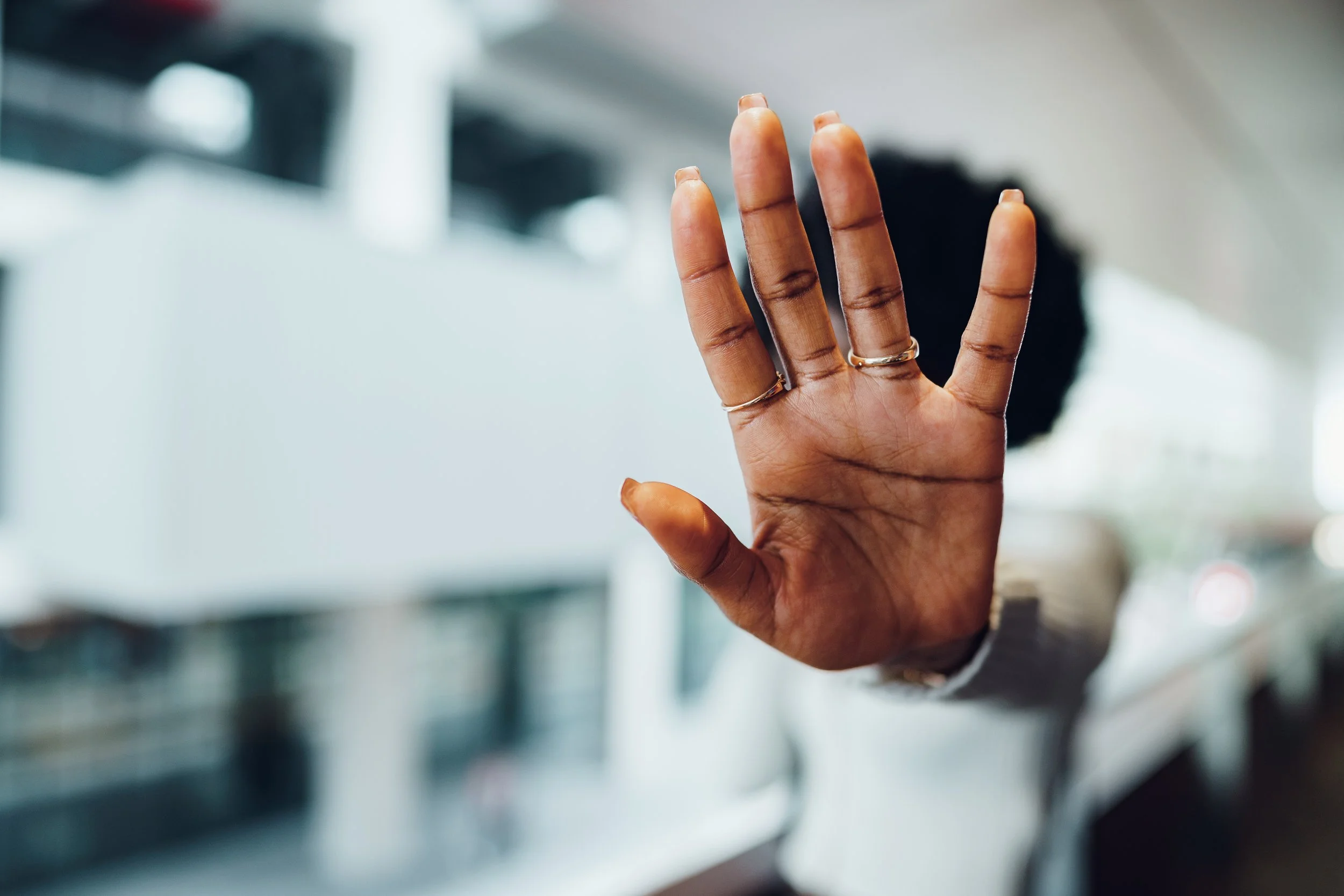
Reclaiming Your Sexual Narrative
Here's what we know from our work with clients and from emerging research: healing is possible, and it starts with recognizing that you are not the stereotype. Your sexuality belongs to you—not to the cultural narratives that have been imposed on your body.
1. Name the Stereotype When You See It
Awareness is the first step. When you notice yourself being filtered through a stereotypical lens—whether by others or in your own mind—name it. "That's the Jezebel stereotype talking" or "I'm noticing the assumption that I should be hypersexual." This creates distance between you and the narrative.
2. Reconnect with Your Body on Your Terms
Your body is yours. Practices like mindfulness, somatic therapy, or even just intentional moments of checking in with your body can help you reconnect with what you actually feel and want, separate from what you've been told you should feel or want.
3. Explore Pleasure as an Act of Resistance
adrienne maree brown, whose work we often recommend, writes beautifully about "pleasure activism"—the idea that reclaiming joy and pleasure is itself a revolutionary act. What would it mean to pursue pleasure not because you're expected to be hypersexual, but because you deserve to feel good in your body?
4. Find Community
You're not alone in this. Whether it's therapy, support groups, or trusted friends who understand these dynamics, finding people who see you beyond the stereotypes is essential. At Rouse, we've seen how transformative it can be when Black clients can explore their sexuality in a space that actively works to dismantle these harmful narratives.
5. Set Boundaries Without Explanation
You don't owe anyone access to your body or an explanation for your boundaries. Full stop. Whether it's in dating, healthcare settings, or anywhere else, your "no" is complete.
Moving Forward
The work of dismantling centuries of harmful stereotypes won't happen overnight. But every time you choose to define your own sexuality, every time you refuse to be reduced to a caricature, every time you experience pleasure on your own terms—that's progress.
Your sexuality is complex, nuanced, and entirely your own. It exists beyond the narrow confines of stereotypes. You deserve to explore it with curiosity, express it with confidence, and experience it with joy.
At Rouse Relational Wellness, we're committed to creating spaces where Black folks can explore their sexuality free from judgment and stereotype. If you're ready to do this work, we're here to support you.
Ready to reclaim your sexual narrative? Book a free consultation with our team to learn more about how we can support your journey toward authentic sexual expression and pleasure.
References
Anderson, J. R., Holland, E., Heldreth, C., & Johnson, S. P. (2018). Revisiting the Jezebel stereotype: The impact of target race on sexual objectification. Psychology of Women Quarterly, 42(4), 461-476. https://doi.org/10.1177/0361684318791543
Harris, D. A. (2018). The myth of promiscuity: Examining Black male sexual narratives and sexuality [Doctoral dissertation, Duquesne University]. Digital Commons @ Duquesne University. https://dsc.duq.edu/etd/1461/
Otto, A. K., Kumar, M. M., & DiLillo, D. (2022). Hip-hop and sexualization of Black women. Psi Chi Journal of Psychological Research, 27(2), 145-157. https://doi.org/10.24839/2325-7342.JN27.2.145
Stanton, A. G., Jerald, M. C., Ward, L. M., & Avery, L. R. (2024). "We are mothers, sisters, and lovers too": Examining young Black women's experiences navigating sex and sexual health. Journal of Sex Research, 61(1), 89-102. https://doi.org/10.1080/00224499.2023.2234143
Young, S. (2018). The myth of promiscuity: Examining Black male sexual narratives and sexuality [Doctoral dissertation, Duquesne University]. Duquesne University Dissertations Collection. https://dsc.duq.edu/etd/1461/